
A shaved head and beard: four looks, four different balances
Published Updated
“A short beard, please.”
Short on the cheeks, under the chin, or everywhere? With a shaved head, those requests draw different outlines. “Short” gives an approximate length. It leaves out the shape.
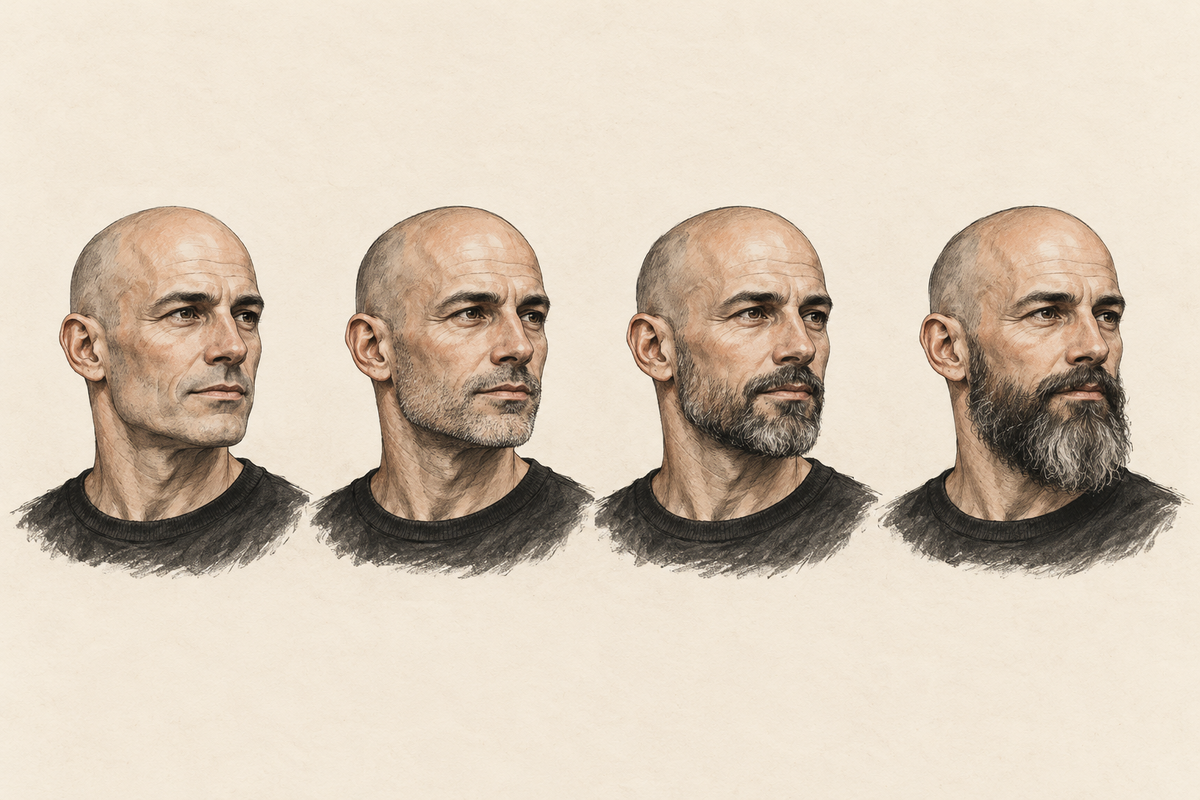
The opening illustration shows four looks on the same drawn character: clean-shaven, stubble, a short full beard and a longer beard with a gentle taper. Look at where each places darkness and volume. These are styling options; your growth pattern and beard colour will give each a different result.
1. Clean-shaven: leave the jaw visible
In the first drawing, the outline follows the cheek and jaw directly. The eyebrows remain the main dark reference above the eyes. I like the clarity of this choice: the expression rests on the features, with little added volume around them.
This look deserves a place in the comparison. A shaved head and a clean-shaven face can make a complete style choice. You owe nobody a compensatory beard.
What to specify: the finish you want on your face. It can differ from the finish on your head, depending on your comfort and habits. The tools and their instructions may differ, too. Show the result you want rather than asking for the same treatment everywhere.
2. Stubble: choose a shadow
In the second drawing, skin remains visible between the hairs. The shadow defines the mouth and jaw without adding as much volume as the next two beards. That contrast is what interests me here: the beard is visible, and you can still read the face through it.
“Three days” gives a familiar idea, but does not describe exactly what you want to see. Ask for a light shadow or a denser presence and show a reference. A setting in millimetres can then help you repeat your own trim; it does not promise the same result as on someone else.
What to specify: differences between areas. You may like a stronger moustache and lighter cheeks. Before evening things out, say which part you want to keep. Uniformity is only one styling option.
3. A short full beard: decide on the width
The third look creates a more continuous surface around the mouth and jaw. A beard can have plenty of presence without extending far down. Look at its sides as well as its bottom: where does the volume begin, and how far does it stand out from the cheeks?
I would start with that question before asking for “shorter”. If you already like the length beneath your chin, you can ask to trim only the sides of the beard. Then compare the front and profile. Trimming everything at once removes the chance to see what that single change would have done.
What to specify: the cheek line. A clearly drawn edge gives a graphic outline; a more natural line leaves a less regular border. Choose the effect you want to wear, then ask what you will need to maintain at home.
4. A longer beard: choose where it ends
The final drawing extends further beneath the chin. The sides stay contained and the bottom forms a soft point. A squarer end would give a different outline; a sharper point would emphasise the vertical. These are directions to try, with no obligation to “balance” your head.
Look at the profile with your usual collar. Do you like the space between beard and clothing, or prefer them to meet? A roll neck and an open shirt raise different visual questions.
What to specify: the length you want to keep. Point to it before the trim: “I like this bottom edge. Take some width off here without bringing the point up.” “Just tidy it up” grants a generous amount of freedom for such a short request.
Give the edges their own conversation

- Cheeks: how much width?
- Chin: how much length to keep?
- Neck: which edge to maintain?
The copper accents mark three separate decisions: width at the cheeks, length below the chin and the edge at the neck. They do not prescribe a universal cutting line. Illustration.
A straight-on inspiration photo tells you little about the underside of the chin or the neckline. Ask to look at the proposed outline from the front and side, with your head in its usual position. Keep this table to separate the decisions.
| Area | What to decide | An example request |
|---|---|---|
| Cheeks | Width and a natural or clearly defined edge. | “Keep this height, but take some bulk out of the sides.” |
| Chin | Length and a rounded, square or gently tapered end. | “Keep the length and round the bottom a little.” |
| Neck | The position of the edge and its upkeep. | “Show me the line you have in mind and the areas I would need to maintain.” |
Adapt these requests to your available growth. They do not establish a universal line to copy at home.
Choose the day after the appointment, too
Before settling on a precise shape, ask which edges you will need to maintain and which suitable tool to use. Be clear about the upkeep you want to do. If you only want to attend to your moustache between appointments, it helps the barber to know before drawing a ruler-straight cheek line.
For a closer look at the length added to the face, our article on head and beard proportions continues the comparison. Then keep front and side pictures of the result with a note: what stayed, what was shortened and what you would change next time. “Same as last time” will finally have something to show.